
South of Hersham, in 225 acres of Surrey woodland, sits one of the more unusual planned settlements in England: a retirement village laid out around a series of concentric octagons, built with the fortune of a Bayswater department store owner who never lived to see it completed.
William Whiteley’s bequest
William Whiteley built one of Victorian London’s great retail empires, styling himself the “Universal Provider” at his Bayswater department store. On 24 January 1907, he was shot dead at the store by Horace Rayner, a young man who mistakenly believed himself to be Whiteley’s illegitimate son; Rayner was convicted of murder and sentenced to death, later commuted to life imprisonment after significant public sympathy for his case. Whiteley’s will left roughly £1 million, a huge sum realised on his death, to fund a model village for elderly people of limited means, one of the largest single acts of philanthropic building in the Edwardian era.
The plan
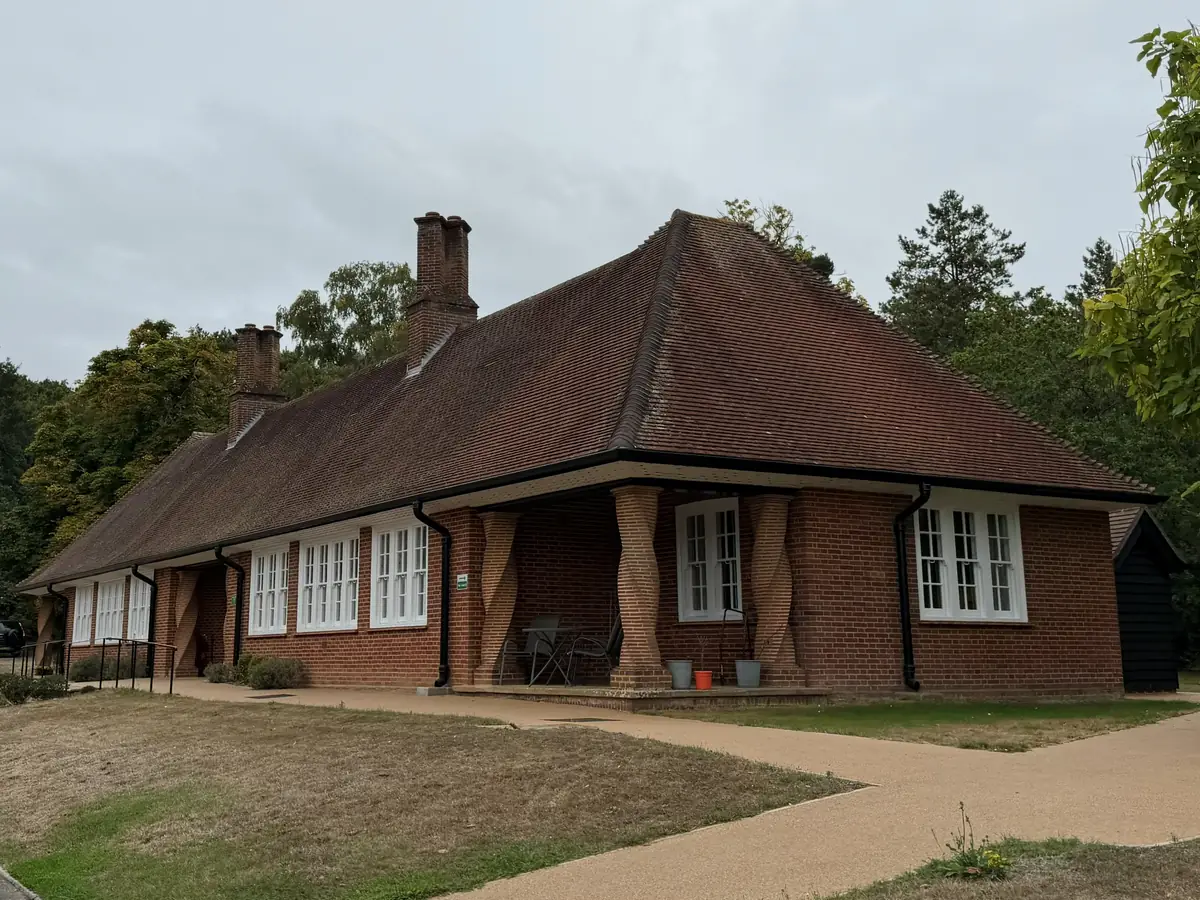
The site was laid out around a central octagonal green, with further concentric octagons of housing radiating outward through the woodland, a genuinely distinctive piece of Edwardian town planning. Several notable architects contributed buildings in a broadly unified Arts and Crafts style, among them Reginald Blomfield, Mervyn Macartney, Ernest Newton and Aston Webb, working to an overall layout devised by Frank Atkinson; the result, drawing on perhaps eight architects in total, holds together as a single coherent village despite the variety of hands involved. Building continued through the First World War, and the first residents moved into their new homes from 1917 onwards.
Who lives there
For who can apply to live at Whiteley Village, how applications work and what the village provides day to day, see our guide to living at Whiteley Village. Whiteley Village remains exactly what it was built to be: a retirement community for older people of limited financial means who are capable of independent living. It today provides well over 250 almshouse cottages, alongside more recent self-contained flats and care accommodation, all owned and run by the charitable Whiteley Homes Trust rather than any commercial landlord. More than a hundred of the village’s buildings are individually Grade II listed, and the whole village has been a designated conservation area since 1979, protecting both the architecture and the woodland setting around it.
Visiting and respecting a private community
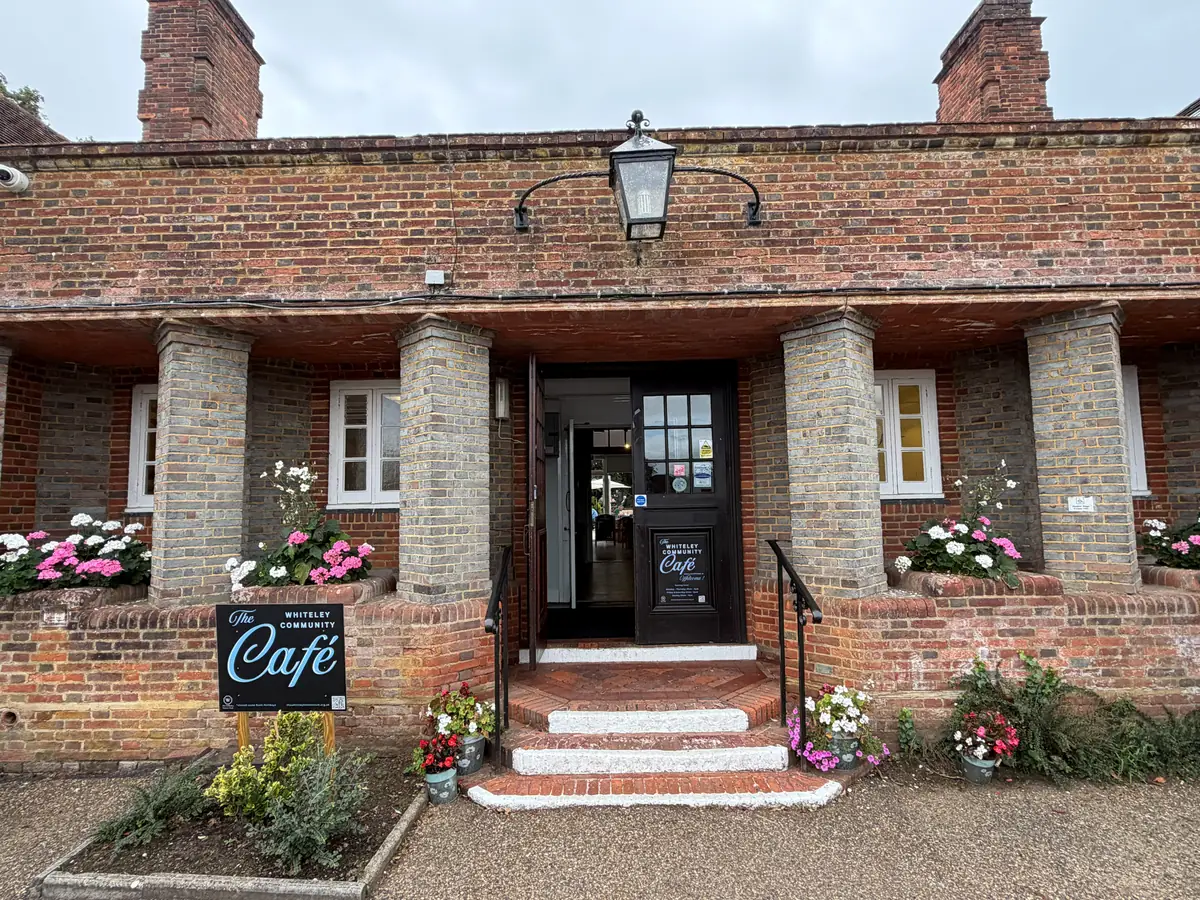
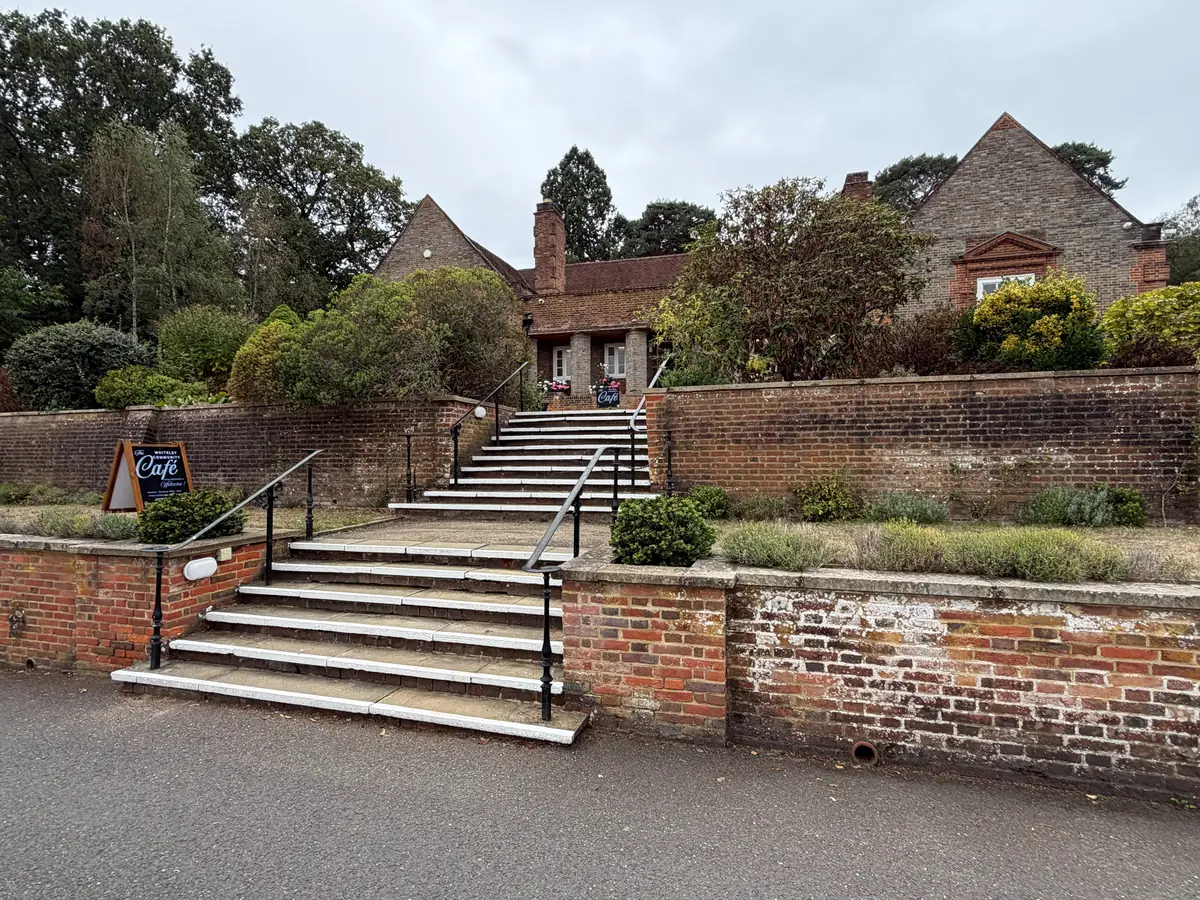
Whiteley Village is not a museum, and it is worth remembering that before visiting. It is a genuinely private residential community, home to real residents who chose to live there for its quiet, and the grounds should be treated accordingly: stay on the roads and paths, keep noise to a minimum, and be mindful that this is somebody’s home rather than a heritage attraction with an admission desk. The Whiteley Community Café, in the Clubhouse on Octagon Road, opened on 21 July 2025 and is open to residents, the local community and anyone visiting the area; check the Whiteley Homes Trust’s café page for current opening hours. Bus route 459 (Staines – Walton-on-Thames – Hersham – Whiteley Village) stops at “Stores, Whiteley Village”; otherwise a car, taxi or bicycle from Walton or Hersham is the practical way to get there.
The village today
More than a century after the first residents arrived, Whiteley Village continues to do precisely what William Whiteley’s will intended: house older people who worked hard and had little to retire on, in surroundings a great deal more beautiful than the bequest strictly required. It sits a little apart from the rest of Hersham, physically and administratively, but it remains one of the most genuinely distinctive places in this part of Surrey, an entire planned village built from one man’s fortune and still doing exactly the job it was built for.
Sources
- Whitebus (n.d.) '459 bus service (Staines - Walton-on-Thames - Hersham - Whiteley Village)'. Available at: https://www.whitebus.co.uk/bus-services/459/ ↗ (Accessed: 5 August 2026).
- Wikipedia (n.d.) 'Whiteley Village'. Available at: https://en.wikipedia.org/wiki/Whiteley_Village ↗ (Accessed: 2 July 2026).
- Whiteley Homes Trust (n.d.) 'Whiteley Homes Trust'. Available at: https://www.thewhiteleyhomestrust.org.uk/about-us ↗ (Accessed: 2 July 2026).
- Wikipedia (n.d.) 'William Whiteley'. Available at: https://en.wikipedia.org/wiki/William_Whiteley ↗ (Accessed: 2 July 2026).
- Whiteley Homes Trust (n.d.) 'Community Café'. Available at: https://www.thewhiteleyhomestrust.org.uk/community-and-activities/community-cafe ↗ (Accessed: 14 September 2026).
- Whiteley Homes Trust (2025) 'Community Café Opens!'. Available at: https://www.thewhiteleyhomestrust.org.uk/about-us/latest-news/community-cafe-opens ↗ (Accessed: 14 September 2026).