
Long before bottled soft drinks became a national industry, a family business on Walton-on-Thames High Street was making and bottling mineral water for the local market. Its proprietor was John Valentine Savage, born in 1836, and its trading name was J. V. Savage & Son. The business itself has left almost no trace in the modern town: no sign, no confirmed street number, nothing a passer-by would recognise. What survives instead is a scatter of small, hard evidence: a line in a Victorian trade directory, a hospital admission record, a newspaper obituary, and the bottles themselves, still turning up in private collections more than a century later.
Who was John Valentine Savage?
Savage was born in 1836, and by the closing decades of the nineteenth century his name was closely tied to both a High Street residence and Walton’s mineral-water trade. The surname is easy to mistranscribe: old optical character recognition and hasty transcription have both rendered it as “Savaige” or even “Ravage” over the years, but contemporary sources are consistent that the man was Savage, and the firm traded as J. V. Savage & Son.
The surviving record does not give a full personal portrait. It shows enough to place him firmly in Walton life, though: a resident of the High Street, proprietor of a named local manufacturing concern, and identified with it closely enough that a newspaper, at his death, described him as the former proprietor of the Walton Mineral Water Works.
J. V. Savage & Son on the High Street
Kelly’s 1891 directory of Surrey lists both the man and the firm at Walton-on-Thames, in entries that distinguish him personally from his trading name: “Savage John Valentine” as a private resident of the High Street, and “Savage J. V. & Son” as mineral water makers at the same address. The two separate entries suggest a proper trading identity rather than an informal description of what Savage happened to do for a living.
Neither entry gives a street number. Walton’s High Street numbering, and the buildings themselves, have changed enough since the 1890s that it would be unsafe to guess at a modern address without independent confirmation from a map, rate book or similar record. The honest position is that the works stood somewhere on the High Street, and that its exact plot has not yet been identified.
The word “& Son” points to a family business, though the surviving sources examined here do not establish which of Savage’s family carried the name forward, so it would be unwise to attach the title to a specific person without further evidence.
What the Walton Mineral Water Works made
“Mineral water” was a broad term in Victorian trade: it covered naturally mineralised water, artificially carbonated water, and flavoured fizzy drinks alike, made and bottled locally for households, hotels, pubs and shops in an age before national distribution networks existed.
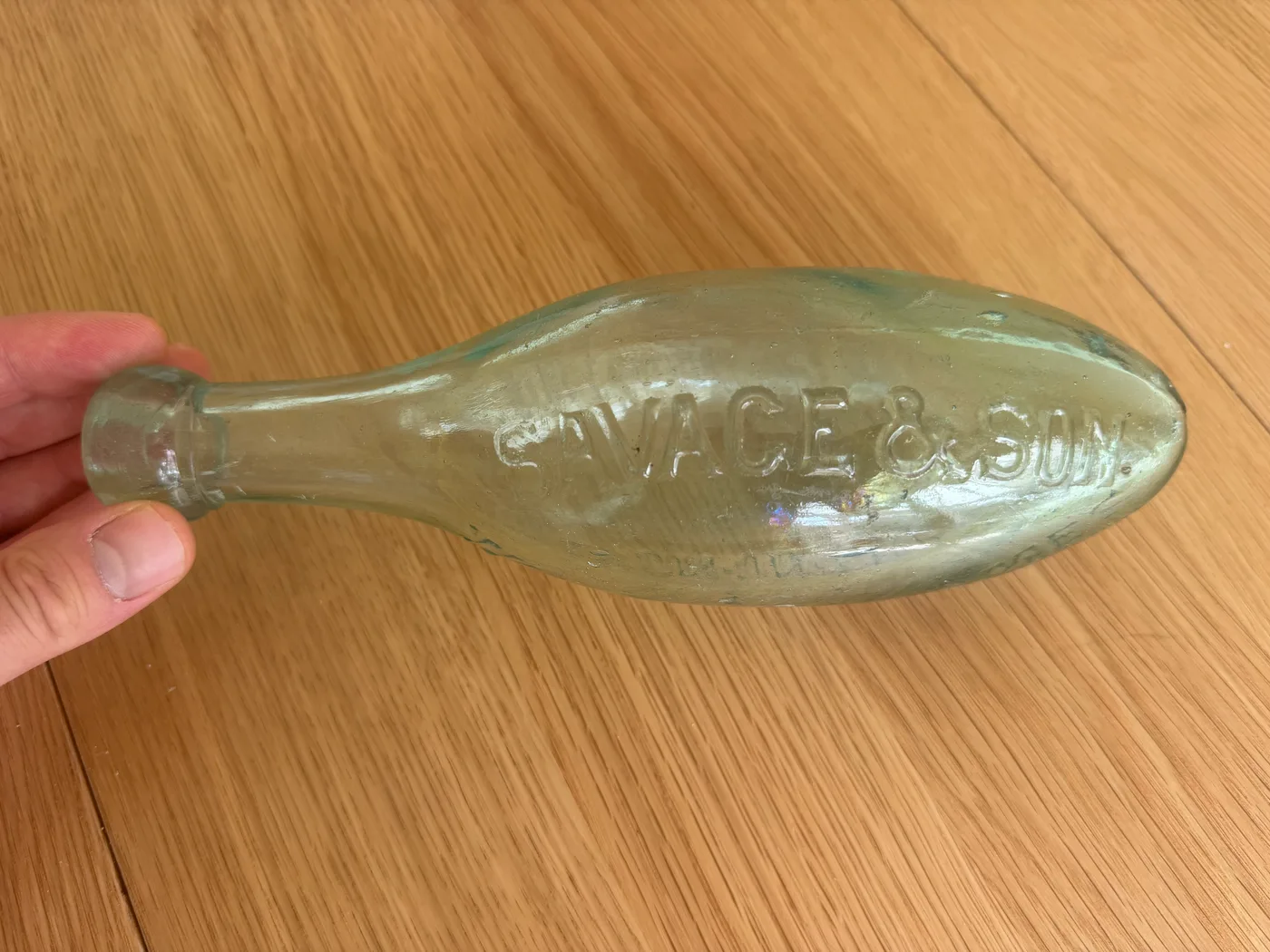
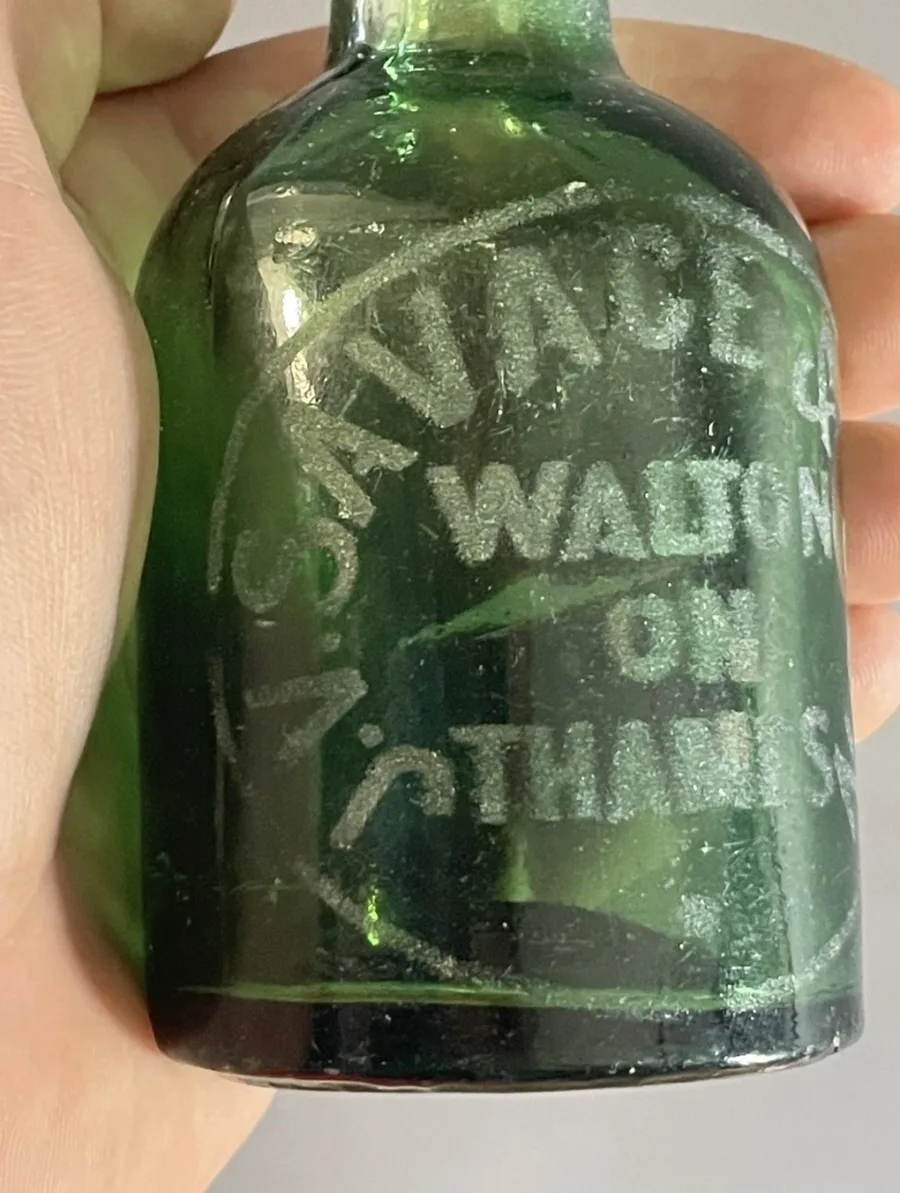
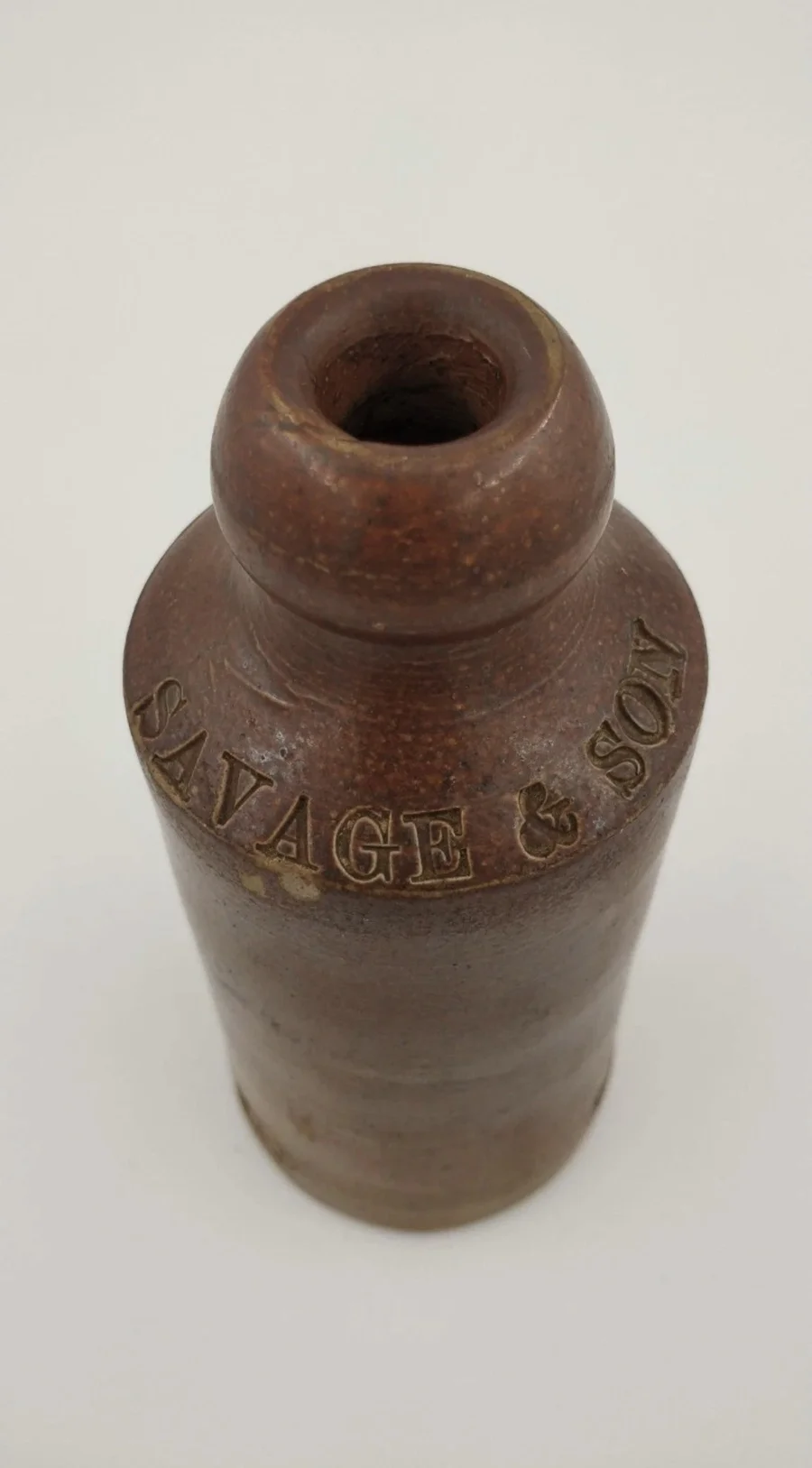
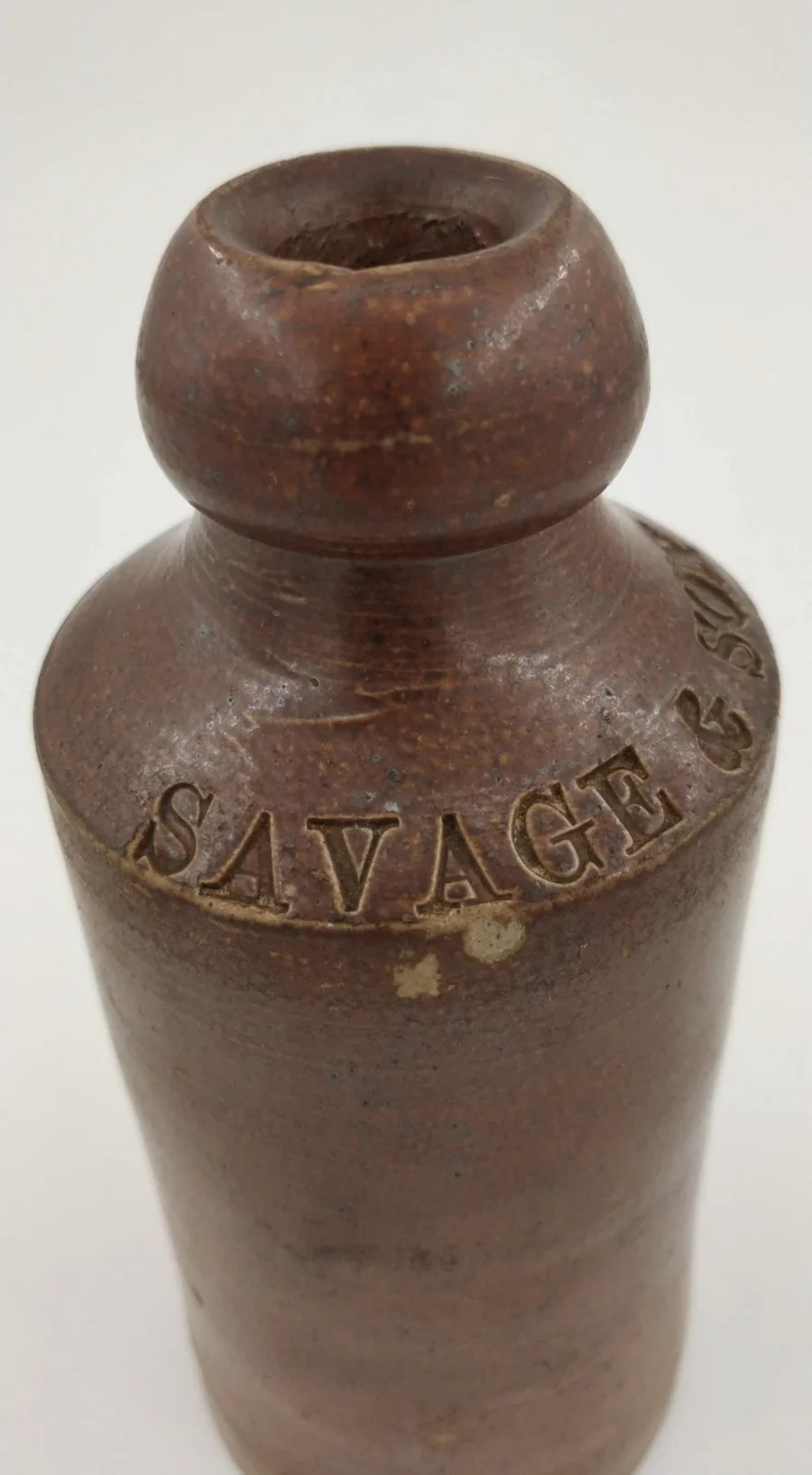
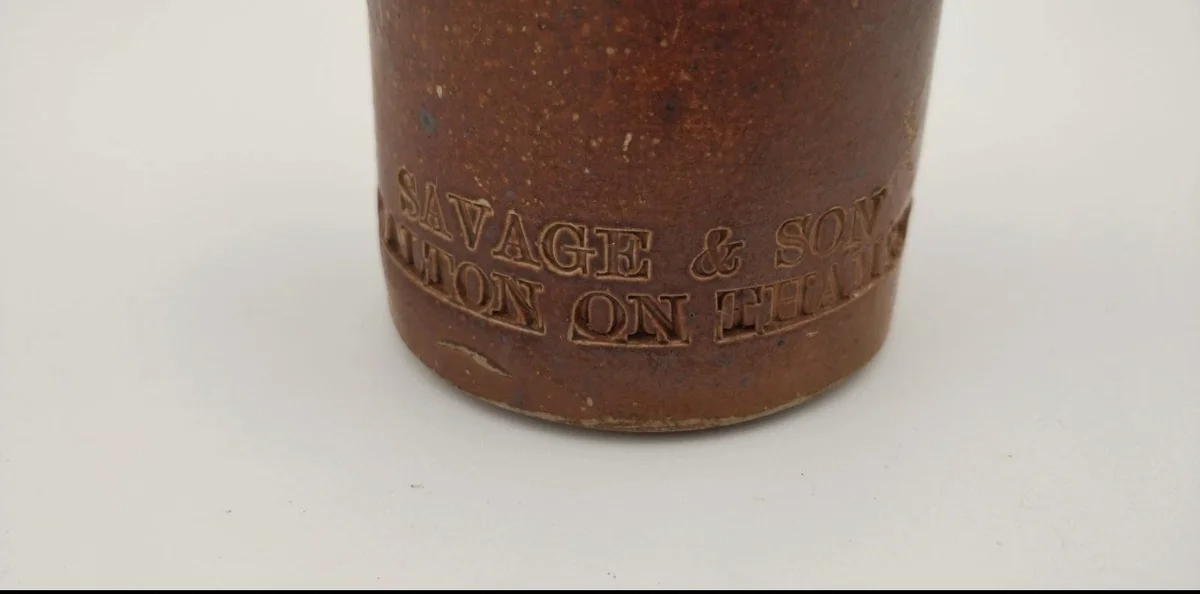
Three surviving examples, photographed here from a private Walton-on-Thames collection, show what the firm actually produced. One is a clear glass bottle with rounded, torpedo-like ends, embossed “SAVAGE & SON” on one side and “WALTON-ON-THAMES” on the other, of a type long used for carbonated seltzer water. A second is a smaller, dark green bottle, squarer in shape, with “J.V. SAVAGE & SON, WALTON ON THAMES” wrapped around its body in raised lettering. The third is different again: a salt-glazed stoneware bottle in the cylindrical, bulbous-necked style long used for ginger beer and other pressurised drinks, with “SAVAGE & SON” embossed around the shoulder and “WALTON ON THAMES” around the base.
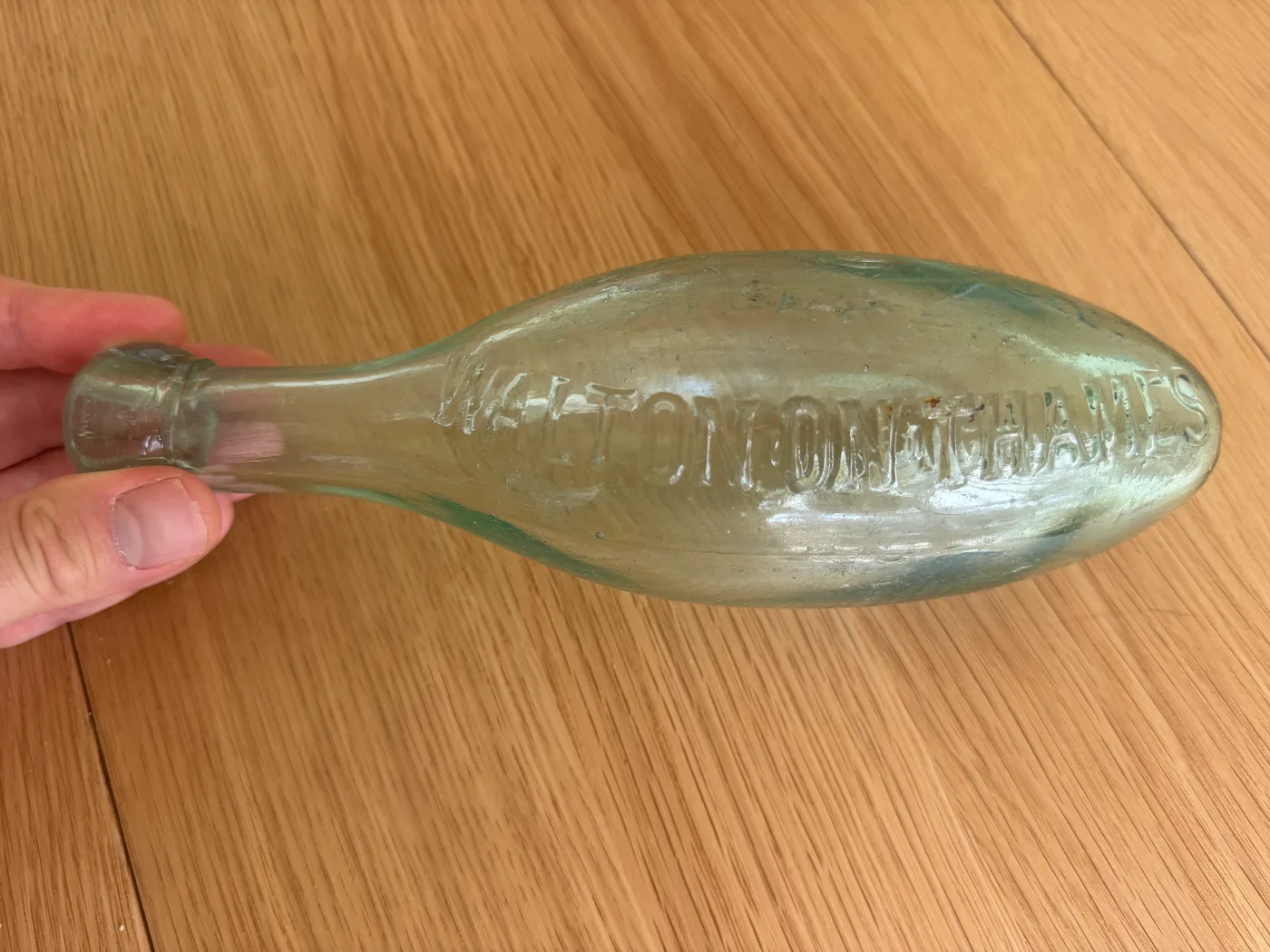
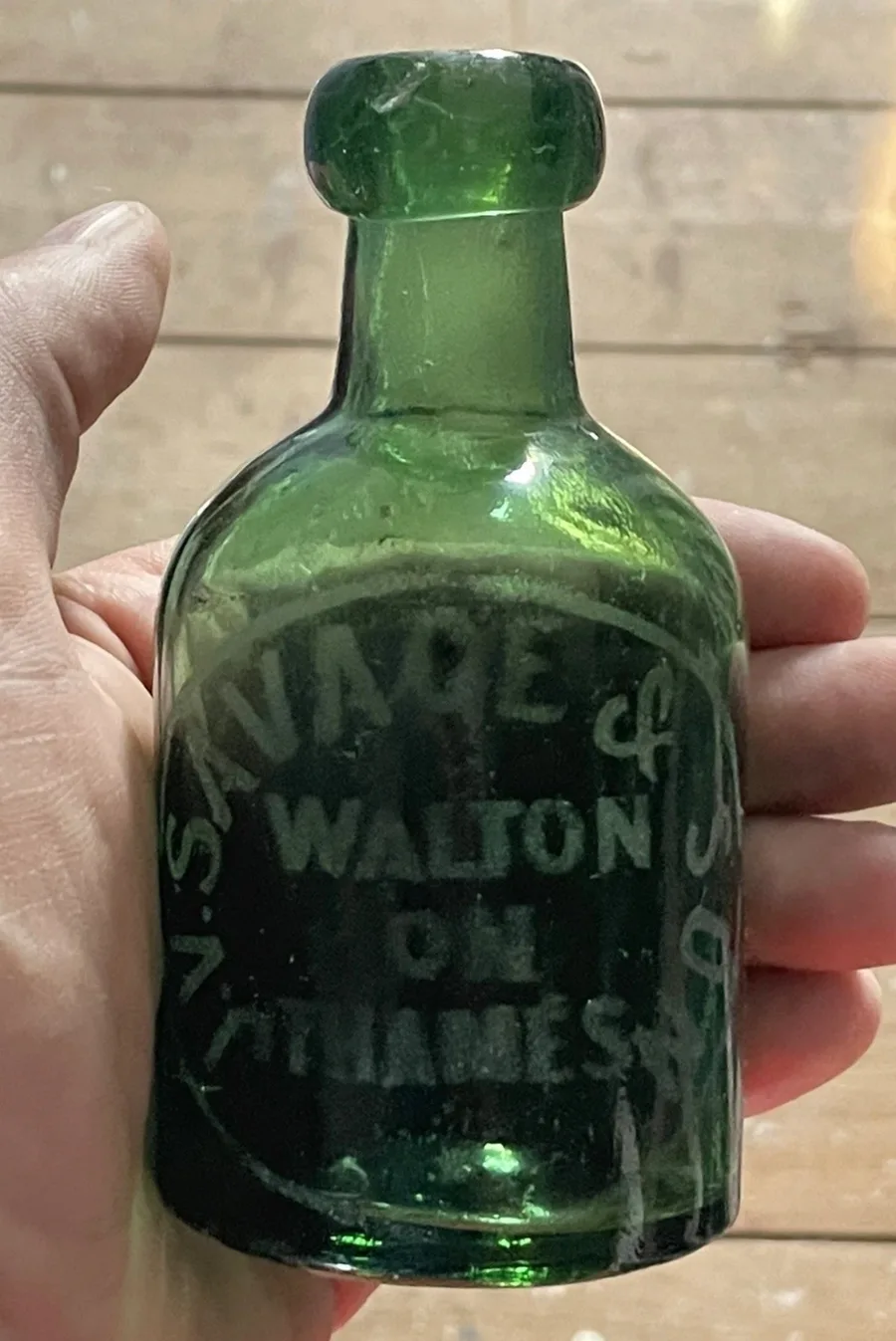
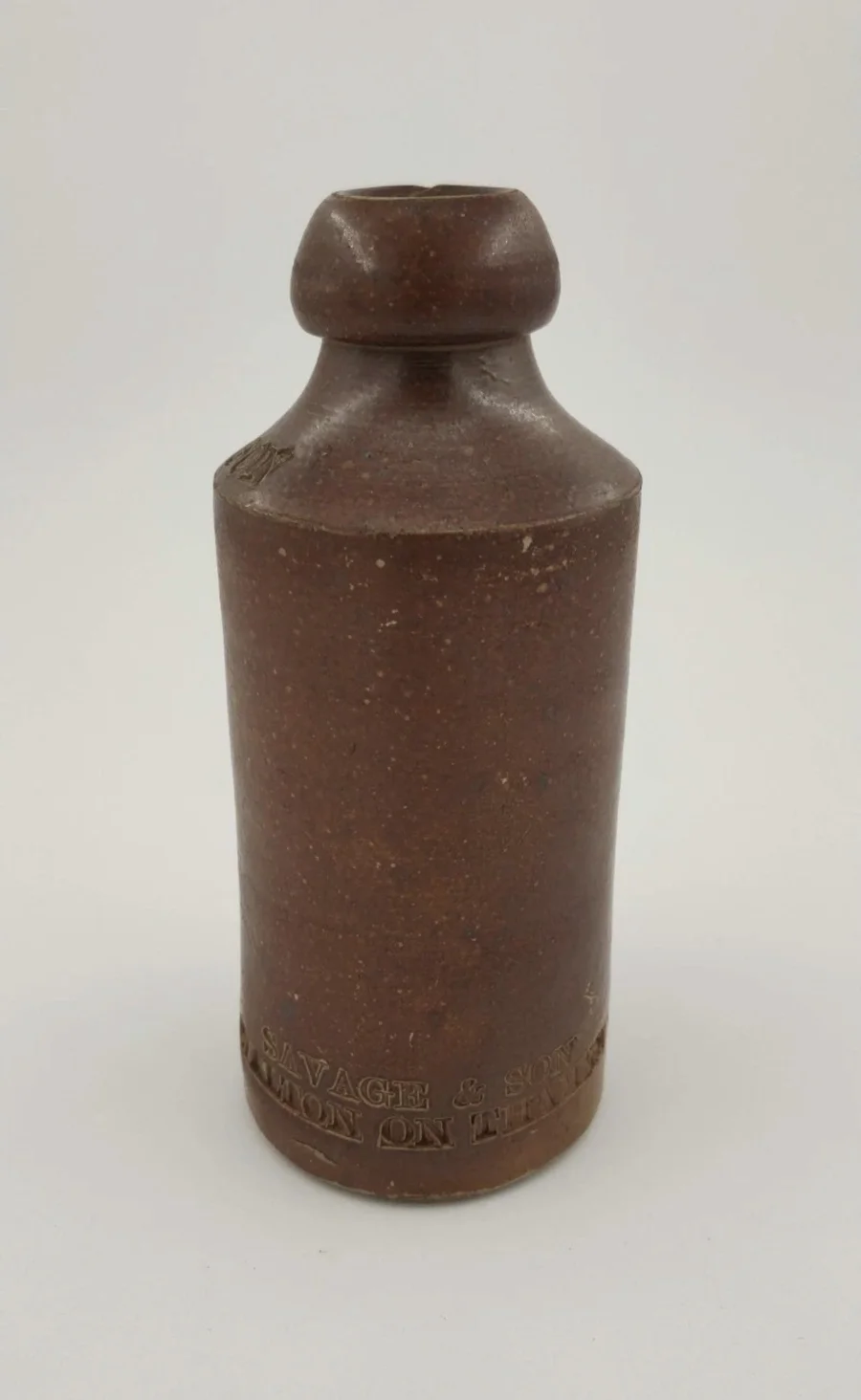
That range matters. It confirms the “mineral water” trade named in Kelly’s directory covered more than one type of drink and more than one type of bottle, glass for seltzer water and stoneware for ginger beer among them, exactly the broad product range the term implied in Victorian trade.
Both bottles were valuable business assets in their own right, not just packaging. Embossing the maker’s name identified their owner, advertised the firm, and encouraged their return for reuse, a routine part of the Victorian bottling trade. More than a century on, that same lettering is what allows a bottle like these to be reconnected with the business, and the town, it came from.
Mineral water in the Victorian age
Savage’s Walton business was part of a much wider nineteenth-century boom in manufactured soft drinks. According to the Science Museum Group, Joseph Priestley discovered a method of manufacturing carbonated water in 1772, and the practical problem manufacturers faced afterwards was keeping the gas inside the bottle. One well-known solution was Hiram Codd’s marble-stoppered bottle, in which internal pressure held a glass marble against a rubber washer to form a seal, opened by pushing the marble down into the neck. Seltzer bottles, of the kind Savage’s firm used, commonly relied on a different pressure-resistant design instead. Whatever the exact mechanism, every local manufacturer faced the same problem: keeping a fizzy drink contained through filling, transport and sale.
For a growing town like Walton, a local works had a clear advantage. Heavy glass bottles could be delivered a short distance, collected, and reused, letting a manufacturer supply nearby homes, shops and inns while building a name people recognised.
A High Street industry that has vanished
It can be hard to picture a manufacturing works operating on Walton’s High Street today, but Victorian town centres mixed retail, domestic and industrial premises far more freely than later planning allowed. A single High Street property might easily have combined a shop or house at the front with yards, stores or production space behind it, exactly the kind of arrangement a small mineral-water works would have needed.
That mix is also why the exact site remains unconfirmed: nothing in the surviving directory entries fixes it to a number, and without a map, rate book, deed or sale particular to test it against, any specific modern address would be a guess rather than a finding.
Savage’s final years
The surviving record of Savage’s last years is a sober one. Surrey County Council’s own index of Brookwood Hospital’s case books records his admission on 24 March 1902, referenced 3043/5/9/1/26, page 63; the same index gives 10 August 1903 as the date his case closed, which matches his death precisely. A notice in the Surrey Advertiser of 15 August 1903 described him as “formerly proprietor of the Walton Mineral Water Works,” using the past tense in a way that suggests he had already given up the works some time before he died, though the notice does not say when or why.
What happened to J. V. Savage & Son?
This is the largest gap in the story. The firm is documented on the High Street through the 1890s, and its proprietor’s 1903 obituary looks back on his time running it, but nothing found so far establishes a full chain of ownership after that point, or fixes the date production actually stopped. A notice of sale, partnership dissolution, bankruptcy or transfer to a successor, if one survives, would help close that gap and might also help fix the works’ exact position on the High Street. Until then, any claim about who continued the business, or exactly where it stood, should be treated with caution.
Three surviving bottles
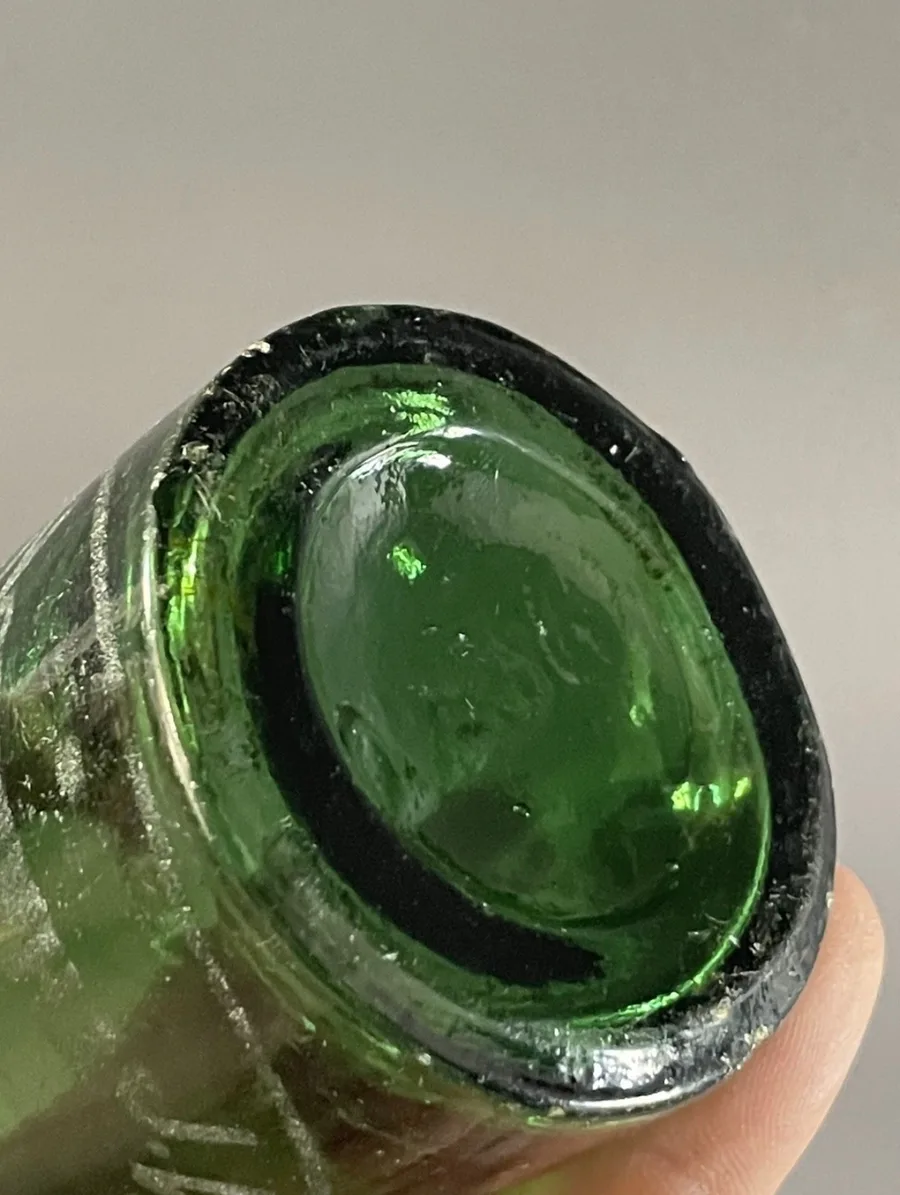
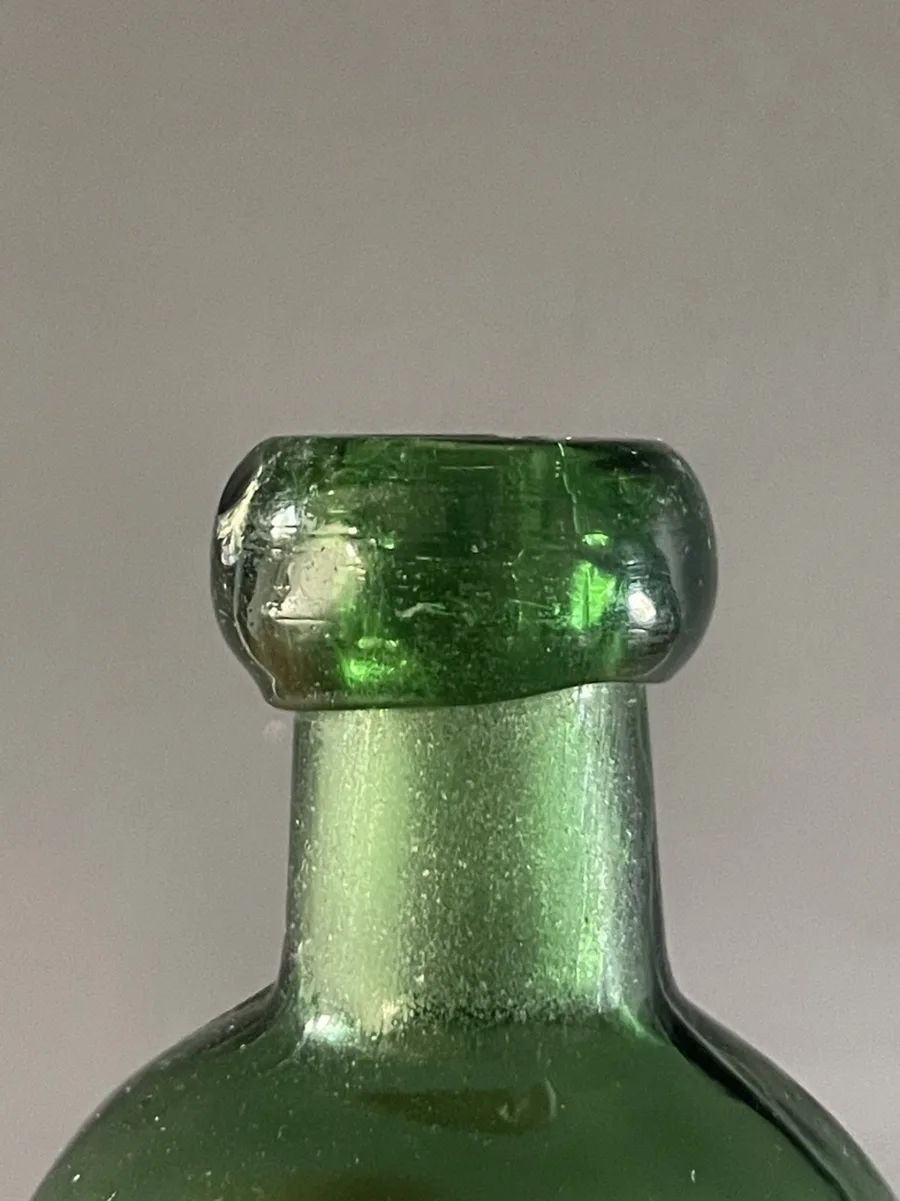
The bottles shown on this page belong to a private Walton-on-Thames collection, and between them they capture most of what a collector or local historian would want to record: the full embossed wording, the material, colour and shape, and the base and neck detail that can sometimes help date a piece more precisely.
The stoneware bottle carries its own distinct set of detail. The embossed lettering wraps around both the shoulder and the base rather than sitting on one face, as the flat, wide surface of a cylindrical stoneware bottle suits a curved band of text better than a straight line.
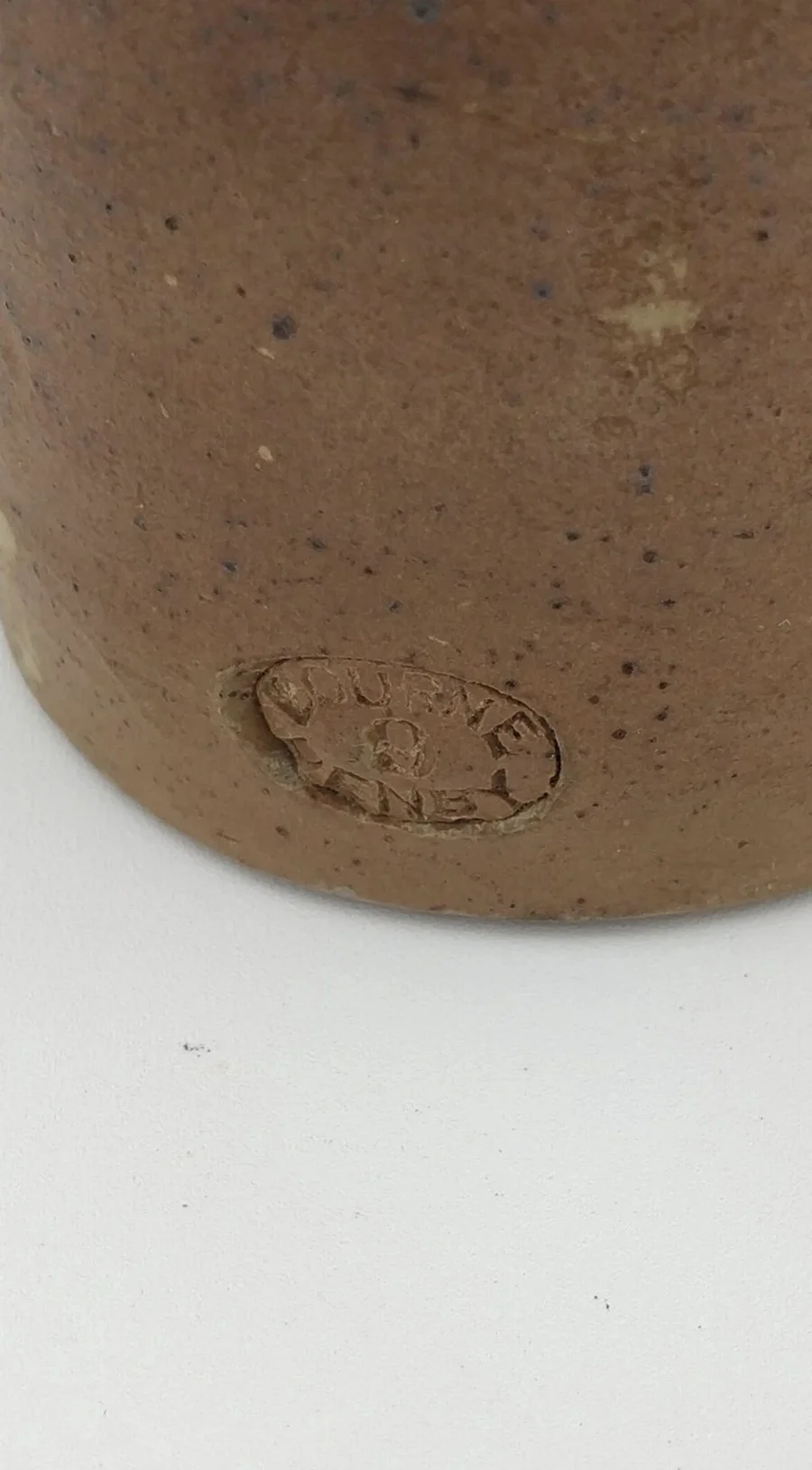
The base also carries a separate, small oval maker’s stamp, the mark of the pottery that produced the bottle rather than of Savage & Son itself, a routine feature of commercial stoneware bottles of the period. It’s too worn on this example to read with confidence, so it isn’t identified here.
Bottles bearing the J. V. Savage & Son name do occasionally surface in bottle-collecting circles and online sales. Their real value lies not in any advertised sale price, which varies widely and proves little on its own, but in their direct, tangible connection to a documented Walton-on-Thames manufacturer whose own paper trail is otherwise thin.
Why the Walton Mineral Water Works matters
Walton’s history tends to get told through its river, its great houses, its churches and its film studios. A business like J. V. Savage & Son shows another side of the same town: an everyday manufacturer, making a consumable product in specialised bottles for a local market, operating from the heart of the High Street rather than its riverside or its grand estates.
It is also a good illustration of how this kind of local history gets pieced together at all. No single source tells the whole story. A line in a trade directory places the firm. A hospital record and a newspaper notice mark the proprietor’s final years. And the bottles themselves, plain glass and stoneware objects that have simply survived, carry the firm’s own name into the present in a way no written record quite matches.
Sources
- Kelly & Co. (1891) (n.d.) 'Kelly's Directory of Surrey, entry for Walton-on-Thames, p. 1535'. Available at: https://leicester.contentdm.oclc.org/digital/collection/p16445coll4/id/167114/rec/1 ↗ (Accessed: 26 July 2026).
- Surrey County Council (n.d.) 'Brookwood Hospital, Woking, Male Case Books 1901-1921, surnames N-Z (index)'. Available at: https://www.surreycc.gov.uk/__data/assets/pdf_file/0007/452329/Brookwood-Hospital-Woking,-Male-Case-Books,-1901-1921,-surnames-N-Z-22072025_110509.pdf ↗ (Accessed: 26 July 2026).
- Science Museum Group (n.d.) 'Rylands mineral water bottle, c. 1900'. Available at: https://collection.sciencemuseumgroup.org.uk/objects/co19120/rylands-mineral-water-bottle ↗ (Accessed: 26 July 2026).
- Surrey Advertiser (1903) (n.d.) 'Obituary notice, 15 August 1903'. Available at: https://www.britishnewspaperarchive.co.uk/titles/surrey-advertiser ↗ (Accessed: 26 July 2026).