
For four years during the First World War, a Surrey country house became the first hospital in Britain dedicated specifically to New Zealand’s wounded. Mount Felix is largely gone now, but the connection it created between Walton-on-Thames and New Zealand has outlasted the building by a century.
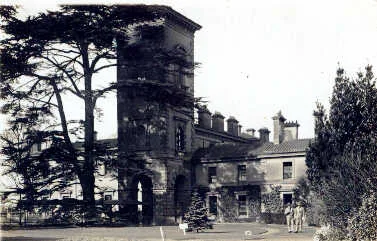
The house
Mount Felix was a substantial estate house on the north side of Walton, its origins reaching back to the fifteenth century in parts, though the building most people would have recognised was a later, grander Victorian remodelling. Like many large country houses across Britain, it was requisitioned for military use once war broke out in 1914, its size and grounds making it a natural fit for a large-scale hospital.
The No. 2 New Zealand General Hospital
The hospital opened at Mount Felix on 31 July 1915, and was the first hospital in the United Kingdom set up specifically for the New Zealand Expeditionary Force. It operated initially simply as the New Zealand General Hospital until 1916, when a second New Zealand hospital opened at Brockenhurst in Hampshire; that new hospital became No. 1, and Mount Felix was renamed No. 2 New Zealand General Hospital. Between them, Mount Felix and the nearby hospital at Oatlands Park provided nearly 1,900 beds, and treated approximately 27,000 New Zealand soldiers over the course of the war before the hospital closed in 1920.
The men who stayed
Not every patient recovered. Those who died at Mount Felix are buried in the New Zealand war graves nearby, a permanent record of the human cost behind the treatment figures. For the men who did recover, Walton became, for a period of weeks or months, an unlikely piece of New Zealand transplanted into Surrey: a place of convalescence a very long way from home, in a town that had never had any particular connection to New Zealand before the war made one.
Behind the treatment figures are individual stories, kept alive by families on the other side of the world. Read Arthur White’s story, a gunner treated at Mount Felix in 1917, contributed by his grandson, the first in a series of soldiers’ accounts we will be adding over time.
Remembrance today
That connection has been kept alive rather than simply archived. St Mary’s Church, a short distance from the Mount Felix site, holds a memorial to the New Zealand soldiers who died here and hosts an annual remembrance service, meaning the link between Walton and New Zealand is renewed every year rather than left to fade. A patient-made memorial banner, now held by New Zealand’s national museum, was carried to the graveside every Anzac Day before a permanent brass tablet took over in 1932. Read more about the church itself, which carries this alongside its own much older history.
New Zealand Avenue
The clearest everyday reminder of the hospital is New Zealand Avenue, a Walton street that takes its name directly from the wartime hospital nearby. It is a small piece of naming that most residents drive past without a second thought, but it marks the same history as the memorial inside St Mary’s: a New Zealand connection written permanently into the map of the town.
Most of Mount Felix itself has gone. A fire in June 1966 led to the demolition of the main house the following year; only the stable block and clock tower survive, Grade II listed, the last physical fragments of the house that once held nearly two thousand beds and thousands of recovering soldiers a very long way from home. Having previously served as offices, the surviving building is now a day nursery.
More recently, the story has been retold in thread rather than brick: see our guide to the Mount Felix Tapestry, the community embroidery project that spent two years telling individual stories from the hospital. For the wider story of Walton during both world wars, see our guide to Walton in wartime.
Sources
- Wikipedia (n.d.) 'No. 2 New Zealand General Hospital'. Available at: https://en.wikipedia.org/wiki/No._2_New_Zealand_General_Hospital ↗ (Accessed: 12 July 2026).
- Elmbridge Museum (n.d.) 'The Mount Felix War Hospital'. Available at: https://elmbridgemuseum.org.uk/online-exhibitions/the-mount-felix-war-hospital/ ↗ (Accessed: 12 July 2026).